
Rethink workplace. Recalibrate value. Regenerate results.
What is a “circular” workplace.
A circular workplace is a strategy for optimizing the entire workplace experience over time while eliminating waste across all systems and addresses the need to plan for multiple unknown futures.

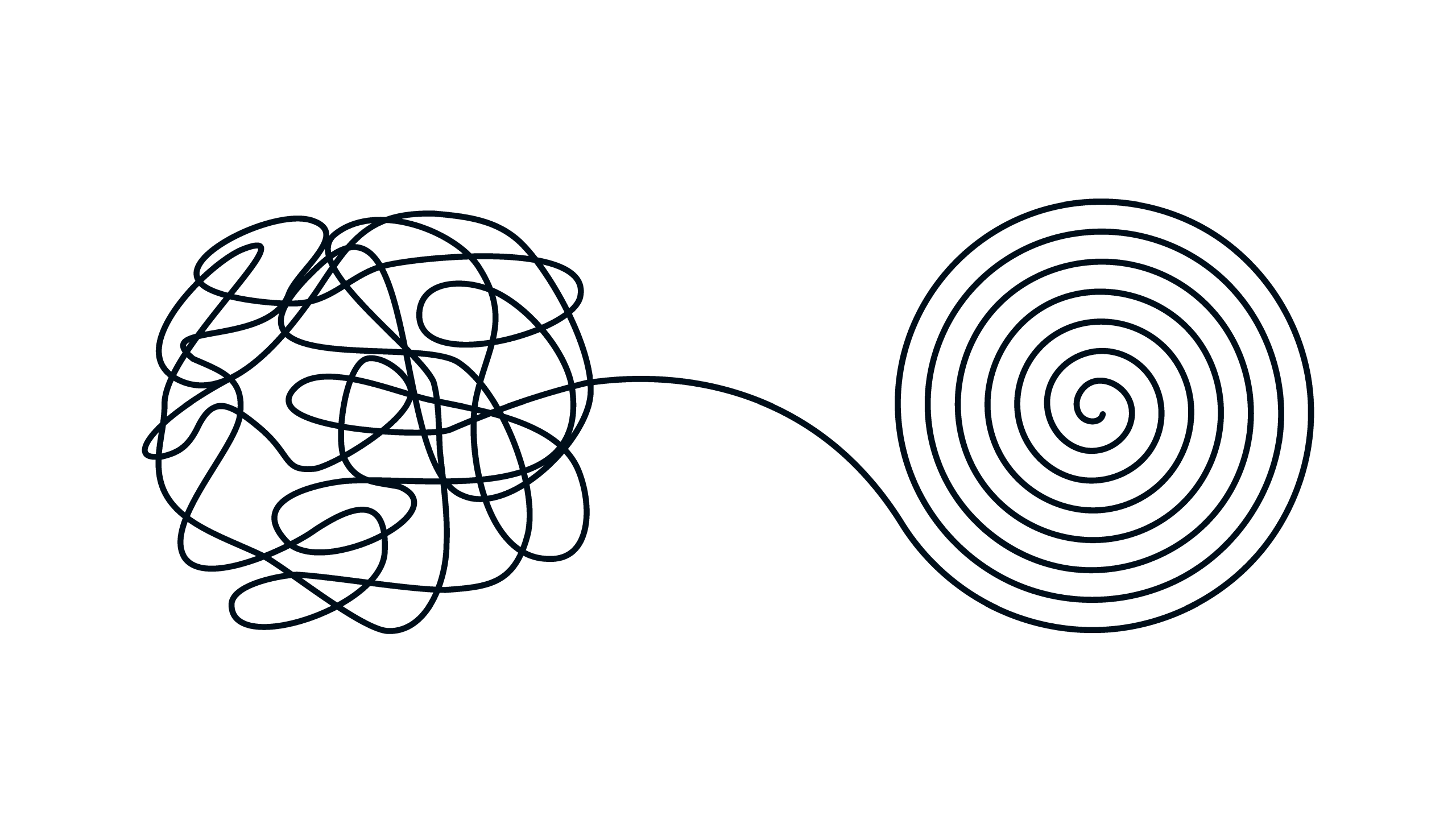
At epicycled, we are focused on circular workplaces. What, you may ask, is a circular workplace? I’m so glad you asked.
What is a workplace? Historically, the terms workplace and office have been used interchangeably.In today’s world, however, a workplace is a complex ecosystem of intersecting spheres: physical space and infrastructure, digital tools and environments, economic and financial frameworks, social and organizational structures, and the emotional and psychological spaces, which combine in predictable and unpredictable ways to create the environment in which work gets done. While we all intellectually know this, we still tend to default to the physical aspect when discussing workplace, even though it may be increasingly the least significant layer. While an office space is necessarily a workplace, a workplace is not necessarily an office.
What is a circular economy? In our current linear economy, we extract resources from the earth, make products from them, and eventually discard them – saturating our communities with waste and pollution. In a circular economy, through thoughtful planning and design, waste is eliminated, products and materials remain in circulation at their highest value, and nature is regenerated. A circular economy can describe economic activity at a macro or micro level – or anywhere in between, and applies to product components, individual products, systems and even complete ecosystems.
Physical environment. Interest in applying circular principles to the physical environment is growing, yet the scope of circular applications varies widely. Circularity might be narrowly focused on a single waste stream, such as steel, or encompass an entire ecosystem, such as whole building deconstruction, where a diverse range of building materials are salvaged, processed and resold. In a workplace or office application, circularity might also mean reusing, repurposing or reselling furniture for a second or third lifecycle. Donation to non-profits and charity may also be included. With respect to end-of-life product and material management, these initiatives can range from more recycling-centric to fully circular, and anywhere in-between.
Circular workplace. Recycling and circularity are often conflated as the same thing.But a circular workplace is not a recycled workplace, just as a circular economy is not a recycling economy. A recycling economy focuses on end of life: managing waste after the initial anticipated use of a product or material has run its course, diverting some waste from landfill. A circular economy – and therefore a circular workplace – starts at the beginning, preventing waste and pollution from being created in the first place. This requires a comprehensive focus on strategy, design, and planning upfront, so that everything, including end-of-life activity, is pre-planned to avoid the waste stream entirely. These strategies must look across the full workplace ecosystem, considering business cycles, work and process design, technological innovation and disruption, human health and behavior, and product lifecycles to develop actionable roadmaps that delineate and account for all future waste. Deconstructed, reclaimed and repurposed building materials and reused office furniture are absolutely components of a circular workplace strategy, but are not by themselves the whole story. A circular economy – and therefore a circular workplace – goes beyond physical waste to account for many kinds of waste such as digital excess, human dignity, experience and productivity deficiencies, and anything else that translates into time, money and material waste.
Why create a circular workplace? A circular workplace is a strategy for optimizing the entire workplace experience over time while eliminating waste across all systems and addresses the need to plan for multiple unknown futures. Conventional workplaces are typically built around a single vision of the future. That singular vision results in a rigid and unforgiving workplace that cannot adapt to change without significant capital investment and development time. Circular workplaces, on the other hand, can hold multiple outcomes within a single design and planning framework, delivering greater flexibility, adaptability, resiliency and long-term value. By engaging with, even embracing uncertainty, a circular workplace delivers solutions for a future that we cannot yet imagine.
Please reach out with any thoughts or questions you may have about planning, designing and operating a circular workplace.
